Gap warns consumers over hoax email vouchers - Brand Republic News - Brand Republic
Brand Republic ran a stroy this morning about some fake vouchers which were floating out there in the online world.
There seems to be a growing surge of online vouchers floating around. In the last week I've had vouchers forwarded to me from GAP, Selfridges, Carnaby Street and Wagamamas. The many newspapers are mentioning people like Threshers.
I remember reading about couponing in a business book. It's all about identifying people who are willing to pay but are put off by high prices. Give them a relatively difficult but straightforward means of obtaining a discount and they'll buy. The effort these people go through then means that the free spending people who wanted the product at the higher price anyway still pay full price. Hey presto, everyone's happy.
The problem is when too many of the high spending people get a hold of the discount voucher. The internet makes it very easy for vouchers \ promotional codes to be spread around in areas where the retailer or producer doesn't necessarily want them to be. Before you know it a discount meant for friends and family appears all over town.
Obviously the majority of retailers will put some crafty T&Cs on the voucher to ensure that they don't end up bankrupting themselves with this sort of offer. However the customer experience in this sort of situation will be quite bad. You've gotten the consumer's hopes up and then dashed them.
Branding considerations also need to come into play. It's nice to see your brand being sought after, but people shouldn't perceive your product as cheap or a bargain (unless you're talking about Tesco Basic). A brand's value is in two things: Amount of people who want it and the amount people will pay for it. Apple's trick is not just the fact that everyone wants their products, it's also the fact that they're willing to pay almost twice as much as the nearest competitor.
Most retailers are fully aware of the potential risks involved with giving out these voucher codes. The current vouchers available show the fact that retailers are a little more worried about Christmas than normal.
All shops have something to gain by saying that Christmas will be bad (helps lower expectations for their quarterly reporting and allows them to not look greedy over the christmas period) but they very rarely do anything about this pessimism until later in the season. This season people seem to be slashing all over the place before all the decorations have gone up.
Good thing is that if they're desparate now, they'll be more desparate later. Might be worth postponing the Christmas shop!
Monday, November 26, 2007

Wednesday, November 21, 2007
Threadless: No Longer Rootless
Threadless: From Clicks to Bricks
Threadless are opening a store. Can't think of many other situations where an online retailer has opened a real world shop...
I'm sure there are examples - I can imagine many family stores started life as an eBay shop. I just like the way the Article talking about this in Business Week made it sound really hard and difficult!
Do they seriously imagine that people won't realise they have to pay rent on a shop? That staff are free? That no-one will charge them for electricity?
While I know some people are a bit stupid you'd think by the time someone is successfully running an $11 million dollar business they might know how to pay rent.
The guy being quoted, Jim Okamura manages the Chicago office of a "Global Retail Consultancy". I bet he charges a good amount per hour. I wonder how much he would charge for that advice.
It's all based on his
I imagine those 14 years have been well spent.
Threadless are opening a store. Can't think of many other situations where an online retailer has opened a real world shop...
I'm sure there are examples - I can imagine many family stores started life as an eBay shop. I just like the way the Article talking about this in Business Week made it sound really hard and difficult!
Web retailers are often unprepared for the costs of running a store, including rent, payroll, and utilities.These sound suspicously similar to the bland pronouncements from the usual crew of consultants and 'experts' cooked up for this kind of article.
Do they seriously imagine that people won't realise they have to pay rent on a shop? That staff are free? That no-one will charge them for electricity?
While I know some people are a bit stupid you'd think by the time someone is successfully running an $11 million dollar business they might know how to pay rent.
The guy being quoted, Jim Okamura manages the Chicago office of a "Global Retail Consultancy". I bet he charges a good amount per hour. I wonder how much he would charge for that advice.
It's all based on his
Jim has 14 years of consulting experience focused on the retail industry, including strategic planning, branding, consumer behavior and multi-channel project work.
I imagine those 14 years have been well spent.
Monday, November 12, 2007
The Value of Digital Citizenship

I am a firm believer in the existence of a Digital Community. I think that both people and companies who make their living on the internet owe something to the great beast that has spawned so much in the past ten or fifteen years.
Some of the things I do, of which this blog is the main thing, is contribute small amounts of content to the overall beast, in the hope that it will one day prove useful to somebody browsing on the internet. The vast majority of people on the internet are using it for benevolent purposes and I believe you have to trust in the good intent of that majority.
I saw an interesting idea today. If a website has been setup to defame your brand (example), it is possible to find ways to make that website disappear from Google.
The company who came up with the idea were strongly advising against this rather extreme tactic, but it got me thinking.
The problem is that most brands and brand managers want to control their brand on the internet. That doesn't work anymore. You make a brand and then release it to the public through advertising. Now it used to be that the only feedback people got about your brand was from their friends, the media and your adverts. Now there are many regularly visited places that can give people independent views of brands and companies.
This has spawned whole movements above and beyond those that used to plague nestle - the amount of effort to setup the movements has decreased hugely so the number of movements has increased. Mild hate campaigns can be setup with ease and spread quickly across a whole host of forums and social networks on the web.
In the face of this, many executives will ban any use of their brand, company or even logo in anything that could conceivably end up out of their direct control. This is silly. If you want people to actually take some time to build a relationship with your brand, you need to show them that you trust them. You need to give them the opportunity to complain. You need to be happy to show people that you are an open company.
Obviously you need to address the moaning, but that's the point. Letting the moaning happen is not a choice. Stopping the moaning is very difficult. Putting your prices up will never be a decision welcomed by your customers, but it's sometimes necessary. Explaining why the prices have gone up will help your cause. Explaining why powdered breast milk can sometimes be useful for parents will help.
Letting people make their own minds up is something that brave brands do because brave brands are confident that they have the best product. Trying to control the conversation is something that brands do when they have something to fear. If you have a problem ask for ideas from your customers. Show them that you listen.
Bit rambling. I think I've made my point, but I don't know what it was.
Wednesday, November 07, 2007
Facebook didn't kill the internet!
Facebook's Big Ad Plan: If Users Like You, They'll Be Your Campaign - Advertising Age - Digital
AdAge report from the press conference where Facebook touted their new ideas.
Beyond the simple things (that Bebo have already been doing) around making sponsored profiles, Facebook are doing something that's actually interesting to marketers and to facebookers. The idea of being able to tell your friends when you've listed something on eBay should be quite useful - extending the reach of personal advertising of this kind.
The idea of Amazon reviews being posted onto facebook is useful too - this is a true use of an opensocial schema. The idea behind it seems to be that facebook should act as a node \ aggregator in the parsing of internet data about our friends. If facebook is notified that you have posted something to the internet (that you are willing to share), facebook will then inform your friends. Facebook sees it's role as combining Twitter, Blogger, MySpace, Amazon and eBay into a navigable interface.
Should be interesting to see how many people facebook can get to use this system. I think this will be of most interest to the smaller retailers who will get the chance to let people know that people shop there. IF you see that your friends are shopping somewhere, you will trust the shop more and therefore hopefully buy from them.
Might be an interesting way of growing some of the smaller players on the internet.
Monday, November 05, 2007
Old Guardian Stuff
Nice ad from the Guardian proving their ethical credentials (and also showing off their reasonably comprehensive archive).
I'm surprised there's little been done by the whole historical crowd to pull out and aggregate this data. I'm sure Google will get there at some point quite soon...
Saturday, November 03, 2007
Ad Tracking Rebellion
Uh - Oh!
The idea that advertisers can target people's behaviour on the internet has allowed many companies to become big. The size of the tracking has been increasing in recent months. There are rumours that facebook's new ad announcement on Tuesday will involve a large degree of tracking consumer's behaviour across other sites.
This will definitely rile the privacy advocates, who will be quite disturbed by the idea that facebook's database will be usable across the whole of the internet. The privacy controversy will deter some people from using facebook as much.
It should be interesting to see what evolves from this. Trust is an extremely important thing for social networks - we share a large amount of data with our social network providers. Although many people are willing to share the data with literally everyone, even more people want to limit the data sharing and control where it ends up. How many facebook profiles are shared with everyone?
I don't actually know what the data says but I'd bet that a good proportion are not shared.
I personally believe that facebook is going to come up with a funky way to advertise on their own site. If they do propose an external network model, we'll see some problems arising for many of the other companies that use almost any kind of behavioural targeting.
One quick look at the largest networks reveals many of them collecting large amounts of information on people using cookies. Tacoda (now owned by AOL), Blue Lithium (Yahoo), Adviva and many others will be exposed. Already around 8% of webusers employ some kind of cookie deletion software or some kind of cookie blocker. Increases in this will not make our job any more fun.
Google will remain smugly aloof (at least until they own Doubleclick!) as their model relies entirely on ads relevant to searches, not who the people are.
Friday, November 02, 2007
Sony slowly getting there
Sony Gets It Right. The New PS3 Ad. « Agency Spy
Rather than focusing on a brand that is rather mysterious, Sony are finally shouting about the features of their box of tricks.
Still not sure they've quite beaten the gears of war ad that the Xbox 360 had earlier in the year - that one definitely did something different for me. I think the Gears of War ad was the first time I considered that the new generation of consoles were doing something other than having slightly better looking graphics.
Ultimately, the success of a console depends on getting good games. I don't think the console makers have done enough to produce exclusive games as of yet. Not having GTA IV exclusively will hurt Sony, and Helo 3 boosts the Xbox. Heavenly Sword looks rather generic beat em up and I am yet to see a game on the PS3 that I actually want to play.
Tuesday, October 30, 2007
Prism - Start of Something New?
Prism
Absolutely brilliant idea from the people at Mozilla (the company that makes Firefox). They've put together a cunning programme that will take individual websites and make them have their own window.
What's the point?
Basically it makes webapps better by removing the browser 'clutter' at the top which makes the whole thing look like a webpage. The plan is that you won't be able to tell the difference between using Google Docs and using MS Word or something like that.
When this is finished, expect to see it become an integral part of Google pack. It'll work with other software too, I'm sure Zoho will be all over it too. This Web 3.0 that everyone's talking about may actually be Desktop 2.0. Let's make a buzzword generator to cover it all off...
Thursday, October 25, 2007
How to promote a museum
Flickr: Victoria and Albert Museum
Really nice idea from the V&A.
Nice bit of interactivity and also encourages people to label their photos when they put them on flickr.
Would be interesting to see if anyone has gotten around to collecting stats on what they've been up to but I doubt that they have. Nice marketing idea that hasn't cost anyone much time or effort.
Will definitely post some pictures up there from next time I visit.
Child Copyright Violator
Inside the Mind of a 9 Year Old File-Sharer | TorrentFreak
Nice little interview with a junior filesharer. It is interesting thinking about all these kids who are growing up with very little concept of how to obey copyright law.
The key is that people are going to break the law if it's easy and pretty much consequence free. There's a whole host of software out there specifically designed to make it easy for you to cheat and to make it easy for you to hide what you're doing.
The quality of the IT work by the rights holder is pretty much abysmal so you can be sure that the nine year olds are going to be able to stay one step ahead of them (by using software written by other people). The studios do seem to be seeing the light in regard to this, but there is still some work to be done.
Ideally (for us!) the perfect solution will be a subscription to a free service that will randomly insert ads in between songs, or in the middle of videos. I think the majority of people will be comfortable downloading something that is convenient, easy to use and reliable in exchange for a couple of adverts.
Overall I think we can succeed in changing behaviour if we replace free with free. We won't if we replace free with pay options - Bittorrent won't disappear and will always be the default option for many people.
Tuesday, October 23, 2007
Facebook vs Myspace Round 95

Really good article going through the various methodologies used to compare traffic across lots of different sites.
Summary is that there's been a little controversy in the States where the standard measurement (Comscore) decided that Facebook had actually lost users and market share in the previous month. Obviosuly this didn't quite chime with the current levels of hype and hysteria around the product.
Something's going on!
It highlights the difficutly of getting good numbers from the larger websites. In the UK we have settled on measurement from ABCe, these numbers are slightly better than the majority of other numbers shown. However, there is still scope to game these numbers and the publishers have a huge incentive to do so. ABC numbers in the press world are often artificially boosted using a range of different methods.
Facebook is definitely not alone in finding huge discrepancies between the (genuine) numbers that they see and the (estimated) numbers that the panels produce. The problem is finding the genuine number. We as advertisers and agencies do not wish to make decisions based on numbers provided by salespeople. Publishers are rightly aggreived when decisions are based on numbers which do not represent their situation.
It's difficult to find a solution and it would be a mistake to think any other media has comprehensively solved this. The ABCe is a welcome development which will hopefully grow larger in time. I'm sure someone somewhere is working on something even better, but we'll have to settle for some kind of slow industry standard in the meantime.
Sunday, October 21, 2007
Cheeky Monkeys
Was looking through to find out who was using radianrss to subscribe to this blog, and what the hell radianrss was.
Did a search on google and got this
Google obviously thought that I meant to search for radiators. What's interesting is that it threw up search ads for radiators. It would be interesting to know how many of our ads are appearing against terms which bore VERY little relation to the words that are being searched for. Seriously - radianrss is quite a different mess of characters from radiators...
It's a good way for them to inflate their revenues still further.
Analyse This
Google ratcheted the quality of their analytics product up by another notch this week.
They have now included two core features into their analytics engine - internal search and event tracking.
Internal Search
They are now able to track people's search behaviour on individual sites. This isn't the hugest new feature for the majority of users on this product. However, any internet retailer will find this hugely useful as it will show how easy the site is to navigate in 'last resort' terms.
I haven't seen any evidence to support my view that search is usually the last thing people use to navigate within a site, but I believe this to be the case with the majority of stores. Only a store with more than roughly fifty products should feel the need to push their search function. All other sites should consider their site design and find ways to guide customers to the right destination without needing them to explicitly tell you what they're after.
For those that do have large numbers of products, it gives an insight into products that are important to customers. It can give an idea about rapid changes in popularity of generic ranges of goods. Admittedly we already have access to which product pages people are looking at, but searches should do some of the categorisation for us.
It will also open up possibilities in terms of measuring the performance of the search pages - tweaks will now be more easy to appreciate.
Event Tracking
This feature would have made a real difference when we were working on Jellyfish. Basically it allows things to be tracked when they don't involve a new page being loaded. Jellyfish was a particular problem since the page only tracked as one URL as far as google analytics could see. Event tracking should mean that we will be able to look at the performance of flash and ajax parts of sites.
More visibility is crucial here and I'm surprised it's taken this long for Google to put in a fix to this problem. Web 2.0 is fast becoming obsolete in terms of jargon, to be replaced by web 3.0 - surely this will then be supplanted by web 3.1 and then maybe web 95?
Anyway, Google are showing us that they're going to continue putting effort into analytics. It will be interesting to see what they come up with once the acquisition of doubleclick is complete. Their tracking system will be really comprehensive then!
Monday, October 08, 2007
Sony Gets Ready to Sell
As everyone knows, gamers are not spending as much time as marketers would like looking at adverts.
Sony seem to have picked up on this theme. In order to make themselves pick up on the potential profits, they are now hiring people to make this happen.
Seems strange that it's taken almost a year to get this sorted out. Large numbers of people already use their systems on a daily basis. Sony control the interface and are also heavily involved in the coding of many of the titles that are released. This means that they can ensure that the adverts are as loud and intrusive as Sony want it to be.
Users will obviously be rather annoyed if the advertising is overly intrusive, this will interfere with their experience. However, they'll probably accept the advertising if it gives them something tangible.
It will be interesting to see how they manage it. At the moment games advertising seems to focus on getting very unobtrusive ads across the game. I suspect Sony will be able to find ways to get bigger and better ads sneaking into the system. Loading screens could definitely use some expansion, and there are usually a good couple of screens within a game that spend a disproportionate amount of time in front of gamers' faces.
Some of the solutions even offer branded characters within the game, though I think this would be a difficult thing to dynamically insert into the code. I'll look forward to hearing from Sony.
Sunday, October 07, 2007
Microsoft Health?
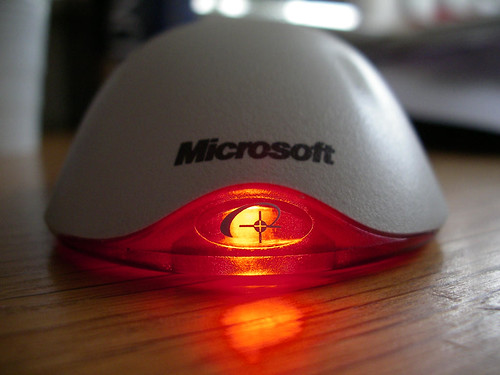
Ars are reporting that Microsoft are in the process of establishing a private system of health records that you can easily take between doctors. It's a really good idea. The NHS are currently spending £12Bn to do just this. Somebody should have told them!
There will be some slightly geeky people who will post a link to this repository from their facebook pages. This will be a little odd, but possible.
This product follows a long trend of people giving sites more and more personal information. There are already services within the US that will look after your bank account for you (Wesabe) and we all know how much info people put onto their facebook and myspace pages.
I read an interesting article (though unfortunately I can't remember where!) comparing web application providers with Banks. Basically you're asking them to store your information and the relationship is entirely founded on trust.
We're still not quite at the point where we can define what we expect from a company in terms of trust - we definitely don't want them to make the information publicly available, but people seem comfortable with some information going to advertisers. If you ask people if they want to share their information, they'll say no - but people are easily swayed by the offer of free services.
I think the evolution of the relationship between application providers and the public will end up hinging on the trust issue. We still haven't seen anyone mishandle privacy in any major way. It will be interesting to see what people's reaction to a mishap will be. Would we see something analogous to a bank run?
Let's wait and see what happens if google accidentally publishes the wrong thing.
Monday, October 01, 2007
Free Trend Continues

Chris Anderson wrote a book about the ‘long tail’ last year (for those of you who haven’t heard that phrase please ask someone in search!).
His next book takes the idea further, from small logistic costs to minimal logistical costs. In other words, what happens when there is no distribution cost and how certain things which we currently pay for (and value) could possibly turn into something free.
His initial predictions are coming true already - Radiohead are releasing their new album in exchange for a 'fair price donation'.
Newspapers are currently fighting among themselves to pull down the subscriber 'walls' within their sites. Good article here
Thursday, September 27, 2007
Decent Advert from ITV
ITV seem to be trying to make people notice their programmes a bit more.
I like their latest outing - caught it on the front page of the Guardian:

It's quite rare to see people being brave with online advertising. There seems to be tendency for clients to sit behind the creatives with a whip shouting "More Flashing! More Text! Why doesn't it say 'click here!'" Glad to see someone's experimenting to see if intrigue can drive some interest to the site.
Obviously it has been tried before, but there's a good whack of investment behind it - homepage of the Guardian is not cheap.
I like their latest outing - caught it on the front page of the Guardian:
It's quite rare to see people being brave with online advertising. There seems to be tendency for clients to sit behind the creatives with a whip shouting "More Flashing! More Text! Why doesn't it say 'click here!'" Glad to see someone's experimenting to see if intrigue can drive some interest to the site.
Obviously it has been tried before, but there's a good whack of investment behind it - homepage of the Guardian is not cheap.
Tuesday, September 25, 2007
Gordon Brown's Favourite Phrases
 Although Swivel is one of my favourite sites at the moment (currently being overwhelmed by the Economist's daily chart news story), Many Eyes from IBM supplies some fantastic options for analysing text content. Unfortunately it does not yet offer embedding.
Have a look at the two pages I created analysing the text of Gordon's Speech:
First a normal tag cloud
Secondly a text analysis that shows the way certain words were used.
Quite useful way to get to the heart of a long speech. Could be useful for a presentation - turning a long argument into bite sized slides?
Monday, September 24, 2007
DoubleClick Launches Site-Side Mobile Ad Management, Advertiser Version in Development DoubleClick Launches Site-Side Mobile Ad Management, Ad

Here we go...
Finally we're seeing the big boys start to take mobile seriously. It'll be interesting to see how this plays out. I've been using Opera's mobile browser in recent weeks and I've been hugely impressed. It converts normal pages (not flash) into pages that are digestible on the mobile. They've also made a good interface that allows the pages to be navigated easily.
There is a slowly rousing argument that there should be no need to develop more than one site for any major media owner - the phone should be able to translate the site's content into a readable format. The problem at the moment is that there's very little in it for the sites - what do they gain from allowing people to read their content, for free, with ads being automatically stripped out.
Hopefully doubleclick's solution will allow sites to begin receiving money for the effort they put into developing their mobile sites. There is more and more content being accessed on the move. Google have put a good amount of effort into helping with local navigation. All the networks have good quality portals with sports results, simple news and travel information.
At some point soon there will be GPS systems which will also be reasonably usable browsers - this should allow passengers to find internet enabled content around their destinations and current locations. Mobile internet isn't necessarily limited to phones, there is plenty of room for location aware uses. Laptops being used with identified and registered hotspots will allow sites to begin to deliver customised content.
My own opinion is that the level of customisation available will not be fully taken up by the vast majority of advertisers in the beginning. Too much customisation will scare and alienate consumers, while the amount of effort and technological development required will put the majority off the investments needed.
However, DoubleClick, Google and their competitors will hopefully take much of the work out of delivering adverts on these platforms.
We'll see what happens!
Hours of Thought
Saw this in the tube the other day. Think it's in Holloway Tube.
Fantastically targeted product, placement and creative.
I'd be surprised if much thought was put into the advert to be honest, but they didn't need to. The story pretty much writes the advert. They've just taken the back of the book and put it into the poster.
Then, to add to the brilliance of the poster, they've added a competition to win some shoes. Simply awesome.
I suspect this has been made directly by the client, and well done them!

Fantastically targeted product, placement and creative.
I'd be surprised if much thought was put into the advert to be honest, but they didn't need to. The story pretty much writes the advert. They've just taken the back of the book and put it into the poster.
Then, to add to the brilliance of the poster, they've added a competition to win some shoes. Simply awesome.
I suspect this has been made directly by the client, and well done them!
Subscribe to:
Posts (Atom)